New and Improved All-American Sun Oven (ok this is really exciting!)

If you’ve followed our blog for a while, you probably know that we both love and use our Global Sun Ovens frequently. We teach about them intensively in our Powerless Cooking Classes because it is such a great way to conserve your fuel as long as you have a sunny day. You can check out a few of our cooking adventures here and here.

Well today we are so excited to tell you about the BRAND NEW ALL-AMERICAN SUN OVEN. The company has taken feedback from customers over the years and has made so many great enhancements to the sun oven. We’re going to highlight some of our favorites in this post, but you can check out the full details over at our Online Store. This new Sun Oven is only available in the U.S. while the Global Sun Oven will still be available in the U.S. and worldwide.

sunoven-newpin

Benefits of the NEW All-American Sun Oven

Screen shot 2013-04-09 at 11.19.41 PM 20% LARGER INTERIOR: Without increasing the exterior size of the oven, the interior can now accommodate a regular 9×13 pan. HURRAY for this! Now you don’t have to buy special pots and pans or limit your meals to smaller meals.
EASIER TO ALIGN WITH THE SUN: No more trying to figure out if the oven is aligned properly with the sun (did anyone else feel like the shadow thing was really hard to get right??) The little plastic E-Z Sun Track Indicators take all the guess work out.
Screen shot 2013-04-09 at 11.15.01 PM MORE STABLE: The stake at the back is now t-shaped so it is more stable in windy weather, it also includes little stakes you can use to pin it to the ground.
Screen shot 2013-04-09 at 11.19.34 PM HOTTER TEMPERATURES: With a thicker glass door and a better sealing gasket, temperatures can now get 10-15% hotter than the Global Sun Oven. On full sunny days you can get up to 360-400 degrees. Woo-hoo!
rack BETTER LEVELING RACK: The new rack looks great, you can use it in different ways, including folding it up and placing it on the floor of the sun oven to increase the usable area inside while still allowing air to circulate in the oven. Love this.
NEW CD: The new CD that comes with every All-American Sun Oven is full of emergency preparedness info, videos, and tons of amazing recipes developed specifically for the sun oven plus FREE recipe organizer software. You can even update the software to download all the new recipes from Sun Ovens website. How cool is that?

sunoven-buy

If you already own a Sun Oven, we have heard that there will be an upgrade kit that will get you all of the new features (except for the interior capacity). We will keep you posted as soon as it is available.

Sneak Peak at the New Features

Paul Munsen, the President of Sun Ovens International stopped by my house when he was in town last week to give me a sneak peek at the new sun oven. I canNOT wait to get my hands on one of these and start using it! I tried to film a video of him showing me the new features but alas, when you have a 6 year old help film you end up with only half of a video. You can see the half of it that actually recorded after I took the phone from her. I TRIED, please forgive me :)

“FUEL THE FIRE” FEBRUARY

We hope you have enjoyed our “Fuel the Fire” in February series. We have had fun learning about and sharing a lot of different fuel options you may consider adding to your Emergency Preparedness Plan. Enjoy the overview of the series below.

If you aren’t signed up already for our FREE CHECKLISTS, make sure you get on the list. You’ll get a free checklist every 2 weeks to help you plan, buy, and use your Food Storage.


This year we wanted to do something educational, but keep with the theme of Valentine’s Day, so we are going to be celebrating Fuel the Fire February by discussing all the different fuels you may be using for your powerless cooking.


The most common fuels people store for powerless cooking are:

  • Wood
  • Charcoal
  • Propane
  • Butane
  • Kerosene
  • Alcohol

There are many considerations when you determine which fuels to store such as: storage limits, using indoors versus outdoors, storing indoors versus outdoors, what types of cooking appliances you can use, etc. For an overview of a lot of these common fuels please check out our Cooking Fuels Overview handout from our Powerless Cooking Class.


While most people are familiar with the above fuels, there have been quite a few new products developed lately that are really great for emergency preparedness/powerless cooking needs. We have been gradually researching, trying, and storing quite a few of these fuels and want to teach you guys more about them.

ReadyFuel: This is a new product from Lindon Farms. It is a gel that can be used indoors or outdoors, and won’t freeze, evaporate, or melt. It’s very light and each packet contains a little metal sheet that can be turned into a holder for your pot. It’s a great little fuel for camping or small cooking needs like boiling water.
READ OUR READY FUEL OVERVIEW

InstaFire: If you’ve followed our blog for a while you will know that we think InstaFire is a great product. It can be stored inside in convenient buckets, it burns in any kind of weather, and will even burn wet wood. It is handy to use in any kind of portable stove or even just on the ground. It’s definitely a nice supplement to go along with your other fuels.
READ OUR INSTA FIRE OVERVIEW

Fuel Disks: There are a few companies putting out fuel pellets or pucks that can be used in stoves such as the Firebox, or Cube Stove. The disks can be re-used if you don’t use the whole thing. They are easy to burn but must be used outside. They store easily and conveniently indoors or out. They are a very efficient fuel with one pellet lasting for one hour of cooking.
READ OUR FUEL DISK OVERVIEW

Solar Power: If you can find a way to harness the sun, solar power can be a great FREE and renewable fuel source for you. We have loved using our Sun Ovens whenever weather permits to conserve other fuels for cloudy days. With the new dehydrating racks you can also have a source for dehydrating fresh foods in a powerless emergency.
READ OUR SUN OVEN OVERVIEW

Stoves: We’re ending off Fuel The Fire February with a quick overview of some stoves you may be able to use with the different fuels we have talked about. While this is only scratching the surface on cooking stoves, we thought you may be interested in a few options such as Make Your Own, Firebox, Cube Stove, and Volcano.
READ OUR STOVE OVERVIEW

Cooking Stoves Overview

Description:
We’re ending off Fuel The Fire February with a quick overview of some stoves you may be able to use with the different fuels we have talked about. While this is only scratching the surface on cooking stoves, we thought you may be interested in a few options.

Make Your Own #10 Can Stove:
A cheap and easy way to build a portable stove is by using a #10 can, cutting out holes for ventilation and placing wires in to hold various sizes of pots. We did a fun tutorial on how to make #10 can stoves, packed with fuels as a gift.

PRO: FREE to make
CON: Not all that efficient or sturdy (you will end up using more fuel)
CLICK HERE TO SEE A TUTORIAL


Cube Stove:
The Cube is made of durable alumized steel with an electrostatic surface which reflects heat better than stainless steel or other comparable surfaces. It can be used in 7 different positions to accommodate different needs, such as cooking fast or slow, or cooking on a large pot or small cup.

PRO: Small, durable, reusable, very inexpensive
CON: Doesn’t fold down flat like the Firebox
CLICK HERE TO BUY NOW OR LEARN MORE


Firebox Stove:
Firebox 5″ Folding Campfire Stove: “The most portable, versatile, easy to use cooking stove ever.” It’s a thin, portable campfire and multi-fuel stove with a 5″ combustion chamber that burns very efficiently. Simply place combustible fuels in the Firebox and ignite from the top or bottom through the fire grate.

PRO: Very efficient, will conserve fuel, folds down into a thin flat stove
CON: Costs more than the free or cheap options
CLICK HERE TO BUY NOW OR LEARN MORE


Volcano Stove:
The Volcano Grill’s unique heating chamber channels the heat upwards towards your food, instead of wasting fuel by expelling heat out the sides and bottom. You can use the Volcano with a variety of fuels, and cook with pots and pans, grills, woks, or dutch ovens. Perfect for camping and or emergency preparedness

PRO: Can use a variety of fuel such as propane, charcoal, Insta fire. You can grill, bake, fry and more
CON: This is a heavier, larger stove. Not meant for compact backpacking situations
CLICK HERE TO BUY NOW OR LEARN MORE


Sun Oven Overview

Description:
While the Sun Oven isn’t a FUEL, the SUN is! We couldn’t talk about fuels, without mentioning the Sun. We love our Sun Ovens. Often times people ask us how we would cook our food if there were no power. Our answer is: We would use the Sun Oven as much as possible, then fill in the rest with a variety of fuels and stoves.

Benefits:
- Uses the Sun as a source of fuel for cooking
- Can be used in the year round as long as there is enough sun to cast a shadow
- Functions just like a home oven
- Preserves your other fuel stores

Drawbacks:
- Can’t be used on rainy days
- Isn’t as fast and effective to boil water as some other methods

Burn Time:
We hope the burn time of the sun is indefinite!

Sun Oven February Special
All Sun Ovens purchased in February are eligible for a FREE dehydrating rack kit and a FREE turkey roasting rack.
CLICK HERE TO BUY NOW OR LEARN MORE

Our Sun Oven Experiments

Check out how Julie’s bread turned out using the Sun Oven!

Check out when Jodi tried out the Sun Oven in the WINTER snow!

CLICK TO VISIT THE MAIN FUEL OVERVIEW PAGE

Fuel Disks Overview

Description:
Fuel Disks are an ideal fuel source for portable wood burning stoves such as the Firebox or Cube Stove. QuickStove Fuel Discs are made of cedar and highly refined wax, they are designed to light easily and to burn hot. Since most meals take less than 30 minutes to cook, they are a perfect solution as an emergency source of heat for cooking.

Benefits:
- Fuel Disks can be stored indefinitely
- Can be used as a fire starter, or fire source
- Can be used as emergency heat source during cold weather
- A dry, easy-to-burn fuel when it’s windy, rainy or snowy
- Can boil water for emergency preparedness cooking

Drawbacks:
- Can’t be used inside
- Needs a stove you can put it in to use for cooking

Burn Time:
QuickStove Fuel Disks are designed to burn for 30 – 45 minutes each.

30 Day Supply:
Approximately 36 fuel discs would give you a 30 day supply of fuel to cook two to three meals a day. Yes, the Fuel Disks can be extinguished. However, it is recommended you break the fuel disk in half if you only need to cook for a few minutes.

Fuel Disc 3 Month Supply
Retail Price: $250.00
Our Regular Price: $179.99
SALE PRICE: $150.00 plus FREE SHIPPING (sale valid through February 24th)
CLICK HERE TO BUY NOW OR LEARN MORE

CLICK TO VISIT THE MAIN FUEL OVERVIEW PAGE

InstaFire Overview

Description:
InstaFire is a great product to use as a fire starter or even as a stand-alone fuel. It can be stored inside in convenient buckets, it burns in any kind of weather, and will even burn wet wood. It is handy to use in any kind of portable stove or even just on the ground.

Benefits:
- Lights and burns in wind, rain, sleet or snow.
- Burns wet firewood — at almost 1000°, and quickly dries out wet wood.
- Compact and lightweight, easily fits and carries anywhere
- Convenient storage, stores inside and outside, even near food
- Great compliment to other fuels
- Easy to extinguish and re-use

Drawbacks:
- Leaves more ash than other options
- Hard to get a flame started in high wind

Burn Time:
1/2 cup of InstaFire will burn for 15-20 minutes

30 Day Supply:
One 5 gallon bucket is about 80 cups of InstaFire, which should boil water 3 times a day for almost a month.

InstaFire 5 Gallon Bucket
Our Regular Price: $79.95
SALE PRICE: $59.95 plus FREE SHIPPING (sale valid through February 24th)
CLICK HERE TO BUY NOW OR LEARN MORE

InstaFire Introduction

The creators of InstaFire came and cooked for us using only InstaFire. See how it worked out in the video below.

CLICK TO VISIT THE MAIN FUEL OVERVIEW PAGE

“FUEL THE FIRE” February: Which Fuel Do I Use?

In the past we’ve posted a few fun things about Valentine’s Day such as “Jodi’s Hot Date”, our Valentine’s Day Office Kit, or Grandma Lori’s famous sugar cookies which could be decorated for the big day.


This year we wanted to do something educational, but keep with the theme of Valentine’s Day, so we are going to be celebrating Fuel the Fire February by discussing all the different fuels you may be using for your powerless cooking.


The most common fuels people store for powerless cooking are:

  • Wood
  • Charcoal
  • Propane
  • Butane
  • Kerosene
  • Alcohol

There are many considerations when you determine which fuels to store such as: storage limits, using indoors versus outdoors, storing indoors versus outdoors, what types of cooking appliances you can use, etc. For an overview of a lot of these common fuels please check out our Cooking Fuels Overview handout from our Powerless Cooking Class.


While most people are familiar with the above fuels, there have been quite a few new products developed lately that are really great for emergency preparedness/powerless cooking needs. We have been gradually researching, trying, and storing quite a few of these fuels and want to teach you guys more about them.

ReadyFuel: This is a new product from Lindon Farms. It is a gel that can be used indoors or outdoors, and won’t freeze, evaporate, or melt. It’s very light and each packet contains a little metal sheet that can be turned into a holder for your pot. It’s a great little fuel for camping or small cooking needs like boiling water.
READ OUR READY FUEL OVERVIEW

InstaFire: If you’ve followed our blog for a while you will know that we think InstaFire is a great product. It can be stored inside in convenient buckets, it burns in any kind of weather, and will even burn wet wood. It is handy to use in any kind of portable stove or even just on the ground. It’s definitely a nice supplement to go along with your other fuels.
READ OUR INSTA FIRE OVERVIEW

Fuel Disks: There are a few companies putting out fuel pellets or pucks that can be used in stoves such as the Firebox, or Cube Stove. The disks can be re-used if you don’t use the whole thing. They are easy to burn but must be used outside. They store easily and conveniently indoors or out. They are a very efficient fuel with one pellet lasting for one hour of cooking.
READ OUR FUEL DISK OVERVIEW

Solar Power: If you can find a way to harness the sun, solar power can be a great FREE and renewable fuel source for you. We have loved using our Sun Ovens whenever weather permits to conserve other fuels for cloudy days. With the new dehydrating racks you can also have a source for dehydrating fresh foods in a powerless emergency.
READ OUR SUN OVEN OVERVIEW

Stoves: We’re ending off Fuel The Fire February with a quick overview of some stoves you may be able to use with the different fuels we have talked about. While this is only scratching the surface on cooking stoves, we thought you may be interested in a few options such as Make Your Own, Firebox, Cube Stove, and Volcano.
READ OUR STOVE OVERVIEW

How to Create an Emergency Binder

With Hurricane Sandy striking so much of the East Coast, we have recently had an influx of readers ask us about preparing for a Natural Disaster. We have talked a lot about this over the years on our blog. Earlier this week we shared 50 Last Minute Ways to Prepare for an Emergency. Last week we posted a Disaster Kit refresher for you to share with your family and friends that will be helpful whether you shelter-in-place or have to evacuate. Today we wanted to do a little refresher on Emergency Binders which are a critical component of Disaster Kits.


What is an Emergency Binder?
In our Getting Started, section we talk about how each family should have a plan, food, supplies, and have their Emergency Binder put together. Whether it’s a natural disaster or a death in the family, every household needs a plan in order to survive, cope, and recover. By creating an Emergency Binder, you and your loved ones will be better equipped to endure unexpected adversity and enjoy peace of mind. It’s a great feeling to be prepared!

You can make your own Emergency Binder, or purchase a pre-made binder to keep all your important documents in place.

You can purchase your own binder, dividers and sheet protectors and compile your own Emergency Binder. This makes it easier to pull things in and out when you need to access them. You’ll want to include your binder in your list of important things to GRAB should you need to evacuate.

WHAT TO INCLUDE IN YOUR EMERGENCY BINDER?

VITAL DOCUMENTS

  • birth certificates
  • passports
  • immunization records
  • CASH – keep a variety of small bills on hand
  • copy of your will, living trust, power of attorney etc
  • medical information including prescriptions
  • military and church papers
  • diplomas and transcripts
  • marriage certificates
  • adoption papers
  • current pictures for family members
  • pet records
  • proof of citizenship

INSURANCE DOCUMENTS

  • homeowners insurance policy
  • auto insurance policy
  • life insurance policy
  • medical insurance policy
  • pictures and lists of all your personal belongings for insurance

FINANCIAL DOCUMENTS

  • copies of your credit cards front and back
  • bank statements
  • retirement/social security statements
  • internet passwords (banking, personal, work etc)
  • utility statements
  • work/tax documents that would be difficult to replace
  • deeds to properties
  • titles to cars, boats etc
  • warranty information

The Prepare My Life Planner is an organized emergency preparedness plan. Not only does is it designed to store and organize all your important documents it ALSO contains a step-by-step plan to help prepare your home and family for an emergency. All of the pages, pockets, pouches, and folders are included.

“PREPARE MY LIFE” PLANNER FEATURES:

  • Complete with Emergency Preparedness sections: Prepare My Family, Prepare My Home, Gather Supplies, Prepare to Evacuate, Prepare to Stay
  • Also includes comprehensive sections on: Personal, Insurance, Financial, Assets, Final Planning
  • Forms for you to fill out ALL your information that you can access and complete online as well, save to your hard drive, and print copies for loved ones
  • Each section walks you through checklists of things you need to do, and things you need to place in your planner in the appropriate sheet protector. Each sheet protector is unique to the type of document you are storing
  • Comes with emergency cards you can pass around, a calculator and pen
  • FOR FULL REVIEW: Click here for more pictures and details


COMMON QUESTIONS

Do I store copies or originals?
This is a personal choice but we recommend storing the originals IN your emergency binder and store photocopies of them in a filing cabinet, and also scan a digital copy and give it to a trusted friend or put it in a safe deposit box. If your house burnt down or was flooded it would be so relieving to know that you don’t have to go through the hassle of replacing those documents. If you already have a water/fireproof filing cabinet or safe you may choose to just put copies in your binder so that you can have the information on hand in an emergency but know that you can return home and find the originals intact at a later time.

What should I store my binder in?
Even though the idea is to grab the disaster kit and bring it with you, there is always the chance that you won’t be home during an emergency. In this scenario you would still want to return home and find your binder in good condition (especially if your original documents are IN the binder). We recommend storing your binder in a fireproof/ waterproof locked box that is small enough to be transported with you in an emergency.

50 Last Minute Ways to Prepare for an Emergency

When disaster is “about” to strike, you may have a couple of days, hours or minutes to prepare. When the disaster is like that of Hurricane Sandy, people had a few days to “prepare” for it. Although we teach to be prepared far before a few days ahead of time, we had some great suggestions from our readers on our Facebook page of things you could do “relatively” last minute.

Follow our FREE checklists to be prepared long before the storm hits next time. Whether that storm be a natural disaster, economic crisis, or just a personal disaster.

  1. Fill your gas tank.
  2. Have a 72 hour kit for every person in your family.
  3. You should have cash in your 72 hour kits because if electricity is out bank ATM’s won’t work.
  4. Turn your fridge and freezer to a colder setting & if you lose power keep the doors closed as much as possible.
  5. If you have extra space in your freezer, take containers or zip-loc bags full of water and fill in the extra space.
  6. Charge all your electronic devices and keep them charged just in case you lose power.
  7. Keep a list of emergency numbers handy, along with family members’ phone numbers. Write them down if you only have them stored in your phone.
  8. Have an emergency escape plan from your home and make sure all family members know it and know where to meet.
  9. Clean out your gutters before the storm comes and make sure that the storm drains on your street are clear from all the fall foliage.
  10. Check your sump pumps.
  11. Be ready to help your neighbors.
  12. Get batteries.
  13. Get a radio so you know what’s going on.
  14. Board up your windows. Stay away from windows.
  15. Have everyone one sleep in the same room so you can keep tabs on them.
  16. Make a few meals and snacks that will last without power.
  17. Make sure to have a non-electric can opener.
  18. Have lots of non-perishables on hand.
  19. Have enough food and litter for your pets.
  20. Have an emergency binder with all important paperwork ready to go.
  21. Have your prescriptions filled.
  22. If you have a gas grill, make sure you have a full tank of propane.
  23. Do your laundry now, so you have clothes that are dry and clean.
  24. Make sure you have a car charger for your cell phone.
  25. If you have a fireplace that you can use to cook in, have a supply of wood.
  26. Check with your elderly and family to make sure they are prepared or invite them over.
  27. Find your glasses so you don’t have to deal with contacts in an emergency.
  28. You can use your water heater for extra water too. Just shut off the intake valve so that you aren’t bringing in contaminated water and use the spigot in the front to dispense water.
  29. Fill up some quart and gallon bags with water and freeze them, you can use them for ice or in the cooler if needed.
  30. Keep items you don’t want damaged by water in the dishwasher as it is waterproof.
  31. Have glow sticks on hand for little ones, especially at bedtime.
  32. 32. Consider filling large containers (the big 40-gal Rubbermaid totes) from the tub spigot, and storing them in the tub. COVER all bins/tubs of water to keep kids and pets safe.
  33. Get hand sanitizer and wet wipes to wash with.
  34. Improvise an emergency toilet with a bucket lined with a bin bag and some sawdust or cat litter to cover the contents after each use.
  35. Be careful of carbon monoxide when using gas heaters/stoves or candles.
  36. Take pictures of every room and closet in your house – it makes a huge difference if you have to deal with insurance companies.
  37. Have a rain barrel to collect water you can use to flush toilets.
  38. Get solar outdoor lights, you can use olive oil in jars with wicks as well.
  39. Pick up a solar phone charger then you will still have power for your cell phone.
  40. If you have a good old fashioned plug in land line phone and socket this will serve you better than a cell phone.
  41. Refill dish soap/laundry soap/ hand soap bottles back up slowly with water, you then have a easy bottles filled for light cleaning, and easy rinsing.
  42. If you have to use a gas-powered generator, make sure to have a little extra fuel on hand; just be very careful where you put it, and be mindful of your local laws on how much you can have on hand at one time.
  43. Don’t forget to pay attention to fire prevention measures. Have your extinguisher handy.
  44. A chainsaw is good for clearing fallen trees. Only use one if you have prior experience. The aftermath of a storm is not the time to be learning how to use it.
  45. Anyone with an oxygen tank – make certain you have 1) a travel tank, 2) a generator or means to operate your home device, 3) that you have notified health officials of your scheduled location during and after the hurricane.
  46. Have books and other non electric entertainment like board games ready for everyone (and flashlights or lanterns for when it gets dark).
  47. Have canning lids on hand so you can, can the meat if freezer defrosts. Use either the wood/coal stove or a gas range. Have the jars sterilized in the dishwasher ready.
  48. Use silicon caulking to seal a stopper in the bathtub before filling it. LOCK the door as a safety measure for kids that may climb in.
  49. Prepare an evacuation list of things you would need to grab in case you need to evacuate.
  50. Turn OFF the TV! If you want to keep updated check for updates then turn it OFF. The constant hype will stress you and your children out.

FREE PRINTABLE DOWNLOAD

We wanted to make this list easy for you to print out to add to your Food Storage Made Easy Binder or to tape up somewhere easy to find. We would normally include it as one of our free binder updates, but wanted to get it out to everyone IMMEDIATELY so we’re posting it here instead.

CLICK HERE TO DOWNLOAD THE FREE HANDOUT

Need help getting started?
For more information on purchasing our Food Storage Made Easy Binder eBook to help you build your food storage using our 26 BabyStep Checklists click here. You will then be able to receive any future updates we do with other great handouts like this one.


Don’t Say I Told You So …

Here’s a little story for you, it might sound familiar.

When I got home from a weekend out of town, my husband looked at me and said “I was going to get a lot of stuff done, but managing 4 kids on my own was a lot tougher than I thought” I resisted the urge to say I told you so and instead shared with him some of my tips for managing.

Many people who are into prepping (whether bloggers or just hobby-preppers) are proudly proclaiming “I told you so” in light of the aftermath of Hurricane Sandy. While it does feel good to know that you would have been prepared for an emergency, we feel that it is much more positive to share “I’ll tell you what to do” instead. If you want to help your family and friends (or yourself) be more prepared should something like this happen in the future, here are a few things you can pass along.

Printable Emergency Preparedness Plan
Download this two-sided brochure and print it out or attach it in an email. It walks you through our entire basic emergency preparedness plan. There’s probably not going to be a better time when people are willing to listen, so please share this brochure with family and friends.

If you aren’t able to print or attach the brochure, feel free to send your friends a link to this post by sharing it on facebook, pinterest, or emailing it.

Website Resources

EPREP Basics: Family Plan
It’s a good idea to be on the same page with your family as to what you would do in case of an emergency.
EPREP Basics: Disaster Kit (72 hour kits)
Be sure to have a disaster kit with supplies, 72 hour supply of food, and your important documents in an emergency binder.
EPREP Basics: Evacuation List
Having a good car kit and grab list will help in case of an emergency where you may need to evacuate.
POWERLESS COOKING
Do you have alternative ways of cooking foods without power? Do you also store the necessary amount of fuel to actually use those methods?

Bug-Out versus Shelter-in-Place
A lot of our materials focus on being prepared should you need to evacuate. Obviously that is a very real scenario which we should be prepared for. But often overlooked is the thought of having to “shelter-in-place”. We don’t emphasis this too much because basically if you are prepared with your disaster kit to evacuate for 3 days, you SHOULD be prepared to stay at home for at least 3 days. Here are a few extra considerations should you be stuck at home longer than that:

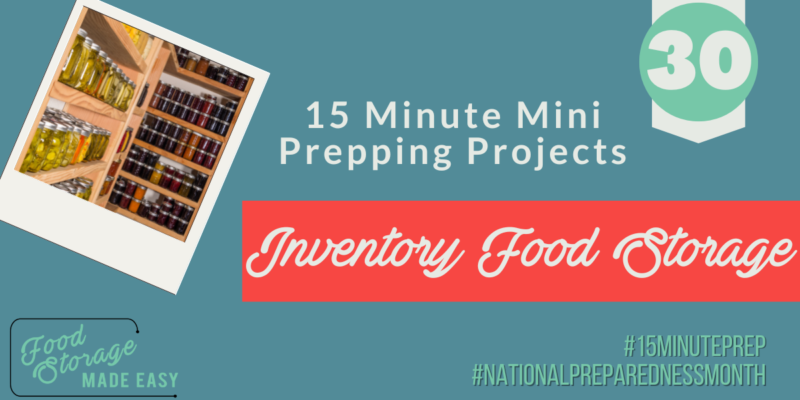
  • Have extra food and water stored. Make sure to store it in different areas of your home. For creative ideas where you can store food and water visit our Small Spaces Storage Solutions post.
  • Protect yourself and your family. If you can’t leave, you need to be able to stay safe at home. The Survival Mom tackles the topic of protection and firearms in a very reasonable way, if that is something you would like to learn more about.
  • Have a way to charge your electronic devices. Life doesn’t stop just because of an emergency. If you have no way to get somewhere with electricity, you have got to have options at home for power for cooking, communication, work, etc. We like the solar options such as Goal Zero or Humless Solar Generators. (Please note: If you order a Goal Zero from Emergency Essentials before November 15th they will donate dollar for dollar to the Hurricane Sandy relief effort providing solar recharging kits to those in need)

Please remember to share this post or the resources above with your loved ones so that you can “Tell them what to do” rather than hammer home that you “told them so”.