Educate yourself on long term food storage and determine the types of foods, recipes, etc. you want to eat. Use an online tool or spreadsheet to figure out quantities.
Key Points: Understanding Long Term Food Storage
- Understand the basic recommended long-term foods and how they are used to help you determine what to store. Read our What Can You Do With YOUR Food Storage article for help.
- Talk to experts in the food storage industry by going to preparedness store classes or to local church seminars.
Key Points: Determining What to Purchase
- Determine the quantities you will need by using our Long Term Food Storage Calculator (see tools section below).
- Start small. Work on a full 3 month supply, then move onto a 6 month, then eventually a year supply.
- Follow the BabySteps Checklists to spread out your purchases over time.
Key Points: Learning to Use Long Term Food Storage
- Use food storage recipe books and websites to learn ways to use your long-term food storage on a regular basis.
- Help your family become accustomed to eating your Long Term Food Storage. This will ease the transition in case of an emergency.
- Talk to your friends and family members about how they use their food storage. Check out our interview with Crystal to see sample questions.
Food Storage Calculator
Use our calculator to determine how much food you need to store depending on your families needs and goals for long term food storage. (When you click on the links below it should download the excel file straight to your downloads folder. If that doesn’t work try right-clicking and choose “save link as”)
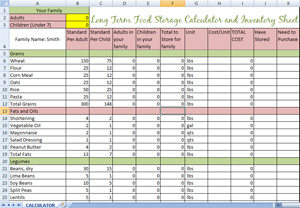

The Food Storage Calculator is also available in printable pdf format
Food Storage Books
Food Storage Made Easy eBook
I Can’t Believe It’s Food Storage
Country Beans
Emergency Food in a Nutshell
Dinner is in the Jar
Cooking With Food Storage Made Easy
I Dare You To Eat It
Marlene’s Magic with Food Storage
Food Storage 101
More Information

Pin This Page to Save For Later

 Hi there! I’m Jodi. I share my preparedness adventures via the blog and social media so you can see what I’m working on day to day.